Most vessels can be electrified, either fully or partially. Conditions like availability of charging infrastructure, route length, available charging time, and maximum weight requirements can impact to what degree av vessel can be electrified. Many larger ships install batteries to become more energy efficient or handle peak loads.

About us
The beginning of a new era. Powered by Echandia.
We stand on the brink of a major transformation.
We stand on the brink of a transformation. The electrification we’ve seen in vehicles is coming to heavy-duty transportation and large-scale applications. Right now, everything from commercial maritime vessels to heavy trucks, and construction machinery is moving from fossil fuel dependency to electric power.
Whether you’re a shipbuilder or building any other heavy-duty application, you need reliable, durable, and economically viable energy storage solutions that can handle the most extreme circumstances.
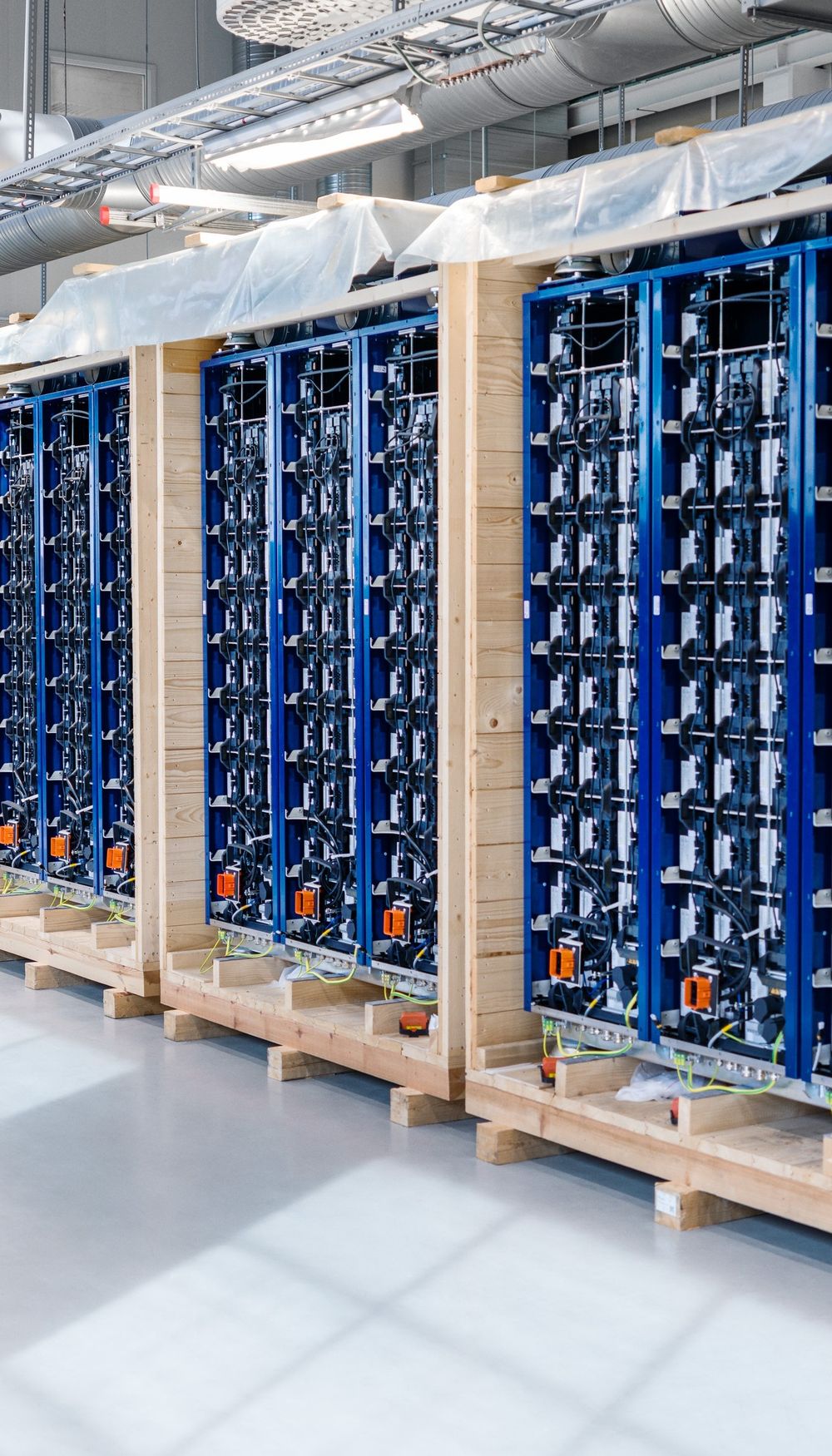
And this is what we do. Echandia supply heavy-duty energy storage where the need for durability, safety and power is top priority. All our systems are built for really demanding applications and will provide a safe, durable, and cost-efficient solution with a superior cycle life.

Echandia in numbers
0>
Employees
0
Offices globally
0>
Systems sold
0>
Tonnes CO2 prevented

A part of the solution
The effects of the climate crisis is forcing us to change and the maritime industry is moving fast. The coming years will establish solutions that will decarbonize global shipping. But transforming an industry takes efforts from all parts of the ecosystem.
Our name, Echandia comes from the Basque expression ‘etxe handia’, which means ‘big house’. And this is our ambition – to be a part of the solution, making our collective place – our big house, – a little bit better every day. This is the way we move the industry and the world forward.
We do this by providing the best possible solutions, to let ship owners and operators transition from running fleets on fossil fuels to running economically viable fleets of zero-emission vessels. To follow our work to build the safest, most reliable energy storage solutions, visit our newsroom.
0%
Longer lifespan
10-year design life – double that of conventional systems
0
Space-efficient
2–3 times more compact than other battery chemistries
$0
Minimal retrofit
The retrofit required removing one diesel engine.
0*
Superior safety
Class-leading safety – no thermal runaway, no fires
Our local presence
Wherever you operate, we’re close by, through our global team and local presence. Don’t hesitate to contact us here.

Frequently asked questions
What kind of vessels can be electrified?
What kind of vessels can be electrified?
How fast can a maritime battery be charged?
How fast can a maritime battery be charged?
How fast a battery can charge, and discharge energy is called C-rate. High C-rates means faster charging. C-rates are closely related to the batteries underlying chemistry and other system components. The time it takes to fully charge a battery is also determined by its size. The smaller the battery, the faster it can be fully charged. Therefore, when designing a battery system, the optimal size is as small as possible while still supplying the energy needed for the operation at hand.
How big is a maritime battery system?
How big is a maritime battery system?
They can be huge, but it depends. Size is limited by how much the vessel can carry and still safely operate in relation to the power it needs. That means, that the ultimate size and weight is determined by the energy requirement for the given application, and its access to charging infrastructure. In maritime, the smaller the system, the better.
How much does a marine battery system weigh?
How much does a marine battery system weigh?
Comparing weight per kWh between different systems will be misleading. Systems that require less buffer energy to meet the energy requirements over the lifetime, will be lighter on system level, even though they might be heavier when compared on a kWh-basis. To know the exact weight for the system, the operational profile needs to be understood.
What is the expected lifetime of a marine battery system?
What is the expected lifetime of a marine battery system?
The lifetime of a battery, or its cycle life is mostly dependent on the underlying battery chemistry. It is also dependent on how the battery is being used over the planned lifetime. The level of usage, or DOD (depth of discharge) is an important variable when designing a system that will be in use for a long time.
How much does a marine battery system cost?
How much does a marine battery system cost?
It depends. To calculate a system price, a number of factors needs to be known. This is what we call the operational profile. The cost per kWh can be misleading since the system size (number of kWh) can sometimes be substantially less, than what is recognized at first analysis.
Are maritime batteries safe?
Are maritime batteries safe?
Safety is a huge issue for batteries in general, and for maritime batteries specifically. A safe battery system requires several layers of system characteristics and measurements. The cell chemistry that is used in the battery is fundamental, on top of that all systems need monitoring and prevention methods, as well as suppression systems, gas vents, sprinklers etc.